by MASA | Jun 13, 2018 | Alpha-One Anti-Trypsin Deficiency, Patient Resources
An alpha-1 antitrypsin deficiency is a fairly rare and inherited disorder that could cause lung disease and liver disease. Symptoms typically develop between the ages of twenty and fifty. Some symptoms can include: shortness of breath, excessive wheezing,...
by MASA | Jun 13, 2018 | Allergic Conjunctivitis, Allergic Rhinitis, Allergies, Allergy Desensitization (Allergy shots), Anaphylaxis, Dust Mite Allergies, Food Allergies / Intolerance, Medication Allergies, Mold Allergies, Pet Allergies, Pollen Allergies
Allergy desensitization is a form of immunotherapy that employs the concept that one’s immune system is able to be desensitized to specific allergens overtime. Allergy shots, specifically, work similar to a vaccine, in that the body responds to the...
by MASA | Jun 13, 2018 | Allergic Conjunctivitis, Allergic Rhinitis, Allergies, Allergy Desensitization (Allergy shots), Anaphylaxis, Dust Mite Allergies, Food Allergies / Intolerance, Medication Allergies, Mold Allergies, Pet Allergies, Pollen Allergies
How does allergy desensitization work? This form of immunotherapy works in a similar fashion to vaccines. By injecting the allergen into the body intentionally, the body eventually builds up a resistance to the allergen, thus desensitizing it from the allergen...
by MASA | Jun 13, 2018 | Allergic Conjunctivitis, Allergic Rhinitis, Allergies, Allergy Desensitization (Allergy shots), Patient Resources
What causes allergic rhinitis? Any type of allergen that your body is allergic to can trigger allergic rhinitis. Call us at 309-254-0995 or 217-717-4404 to schedule an appointment and find out what allergens may trigger you. How long does allergic rhinitis last? The...
by MASA | Apr 19, 2016 | Asthma, Chronic Obstructive Lung Disease (COPD) / Emphysema, Patient Opportunity, Respiratory Diseases
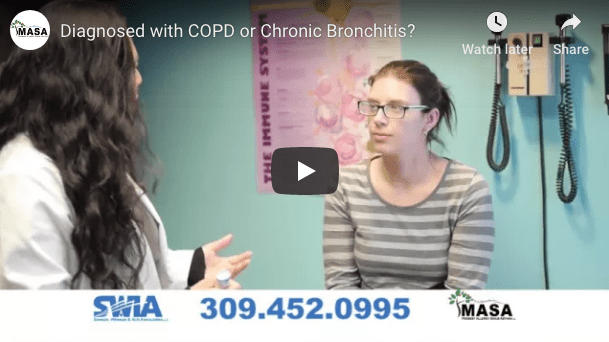
This commercial is for a clinical research trial for those diagnosed with COPD or Chronic Bronchitis. For more information about current trials, visit our SWIA research tab or call us at 309-452-0995 to ask about our clinical research opportunities. Want to learn more...