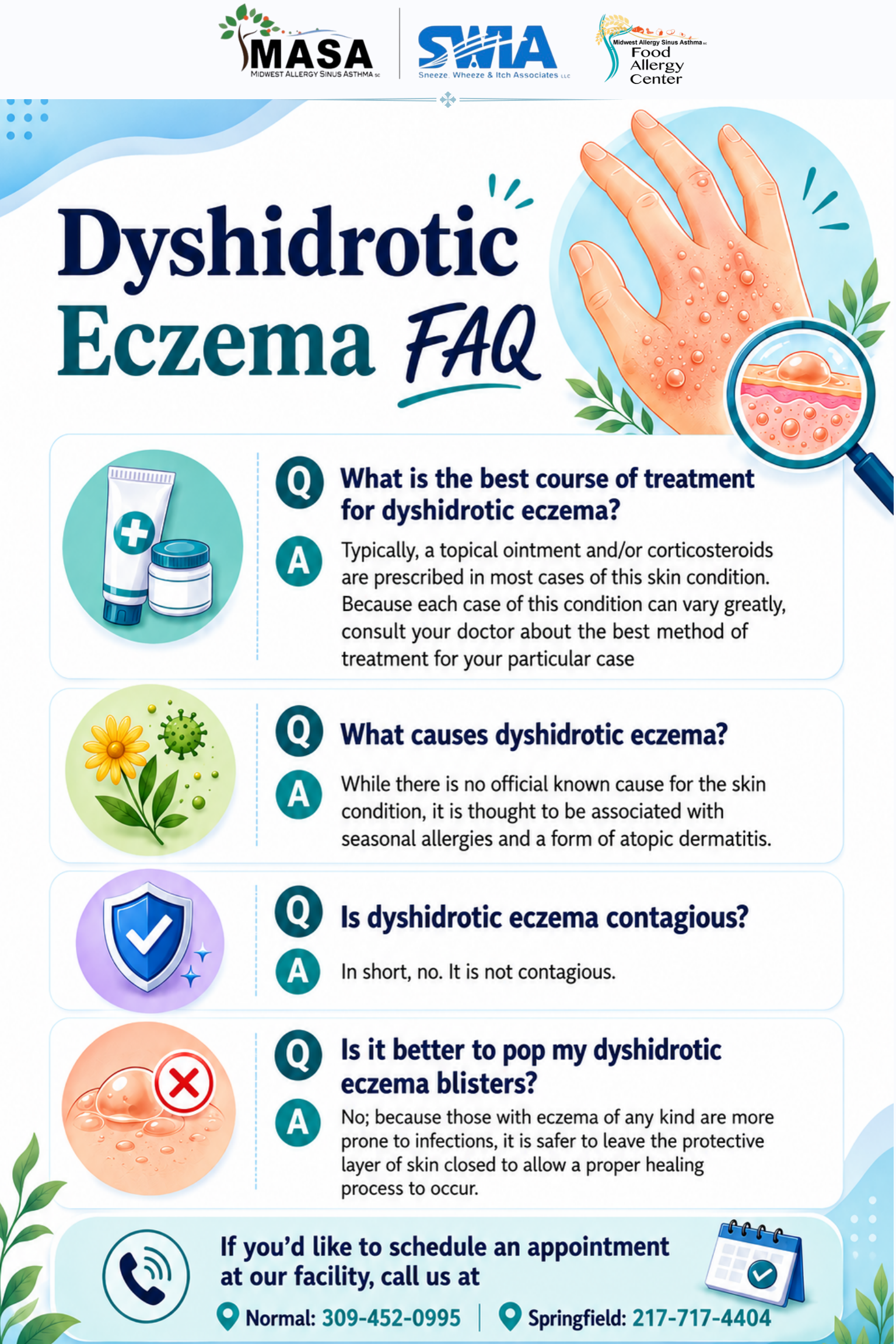
This is a common form of eczema, also known as dyshidrosis or pompholyx, that causes small, itchy blisters to form on one’s fingers, toes, palms, and soles of one’s foot. This skin condition is thought to be hereditary and is twice as common to occur with women as it is with men. It has been known to occur more frequently throughout the spring allergy season because of its association with those who have hay fever, as well as contact and atopic dermatitis. Blisters could last for up to roughly three weeks before drying out.
While there is no known cure, the condition is oftentimes manageable and is not at all contagious. Some triggers are thought to be stress, pollen, excessive moistness around the area affected, as well as some exposure to certain elements.
Some of these at-home action may help to alleviate some of your symptoms:
-Wash the affected area and pat dry, especially after coming into contact with a trigger
-Remove jewelry when washing your hands to avoid leftover water underneath
-Moisturize frequently throughout the day
-Work on managing your stress
-Keep your fingernails short to help prevent excessive scratching
Consult your doctor for the best treatment method for your specific condition, being that every case varies depending on the individual. Contact us for an appointment at 309-452-0995 or 217-717-4404 today.
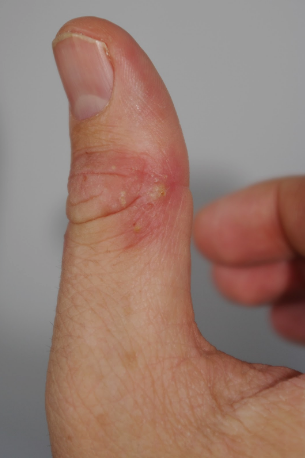
Symptoms can include, but are not limited to, the following:
-Deeply set blisters
-Itchiness
-Redness
-Flaky/cracked skin
-Pain at site of blisters