
MIDWEST ALLERGY SINUS ASTHMA (MASA)
Sneeze Wheeze & Itch Associates | Food Allergy Center
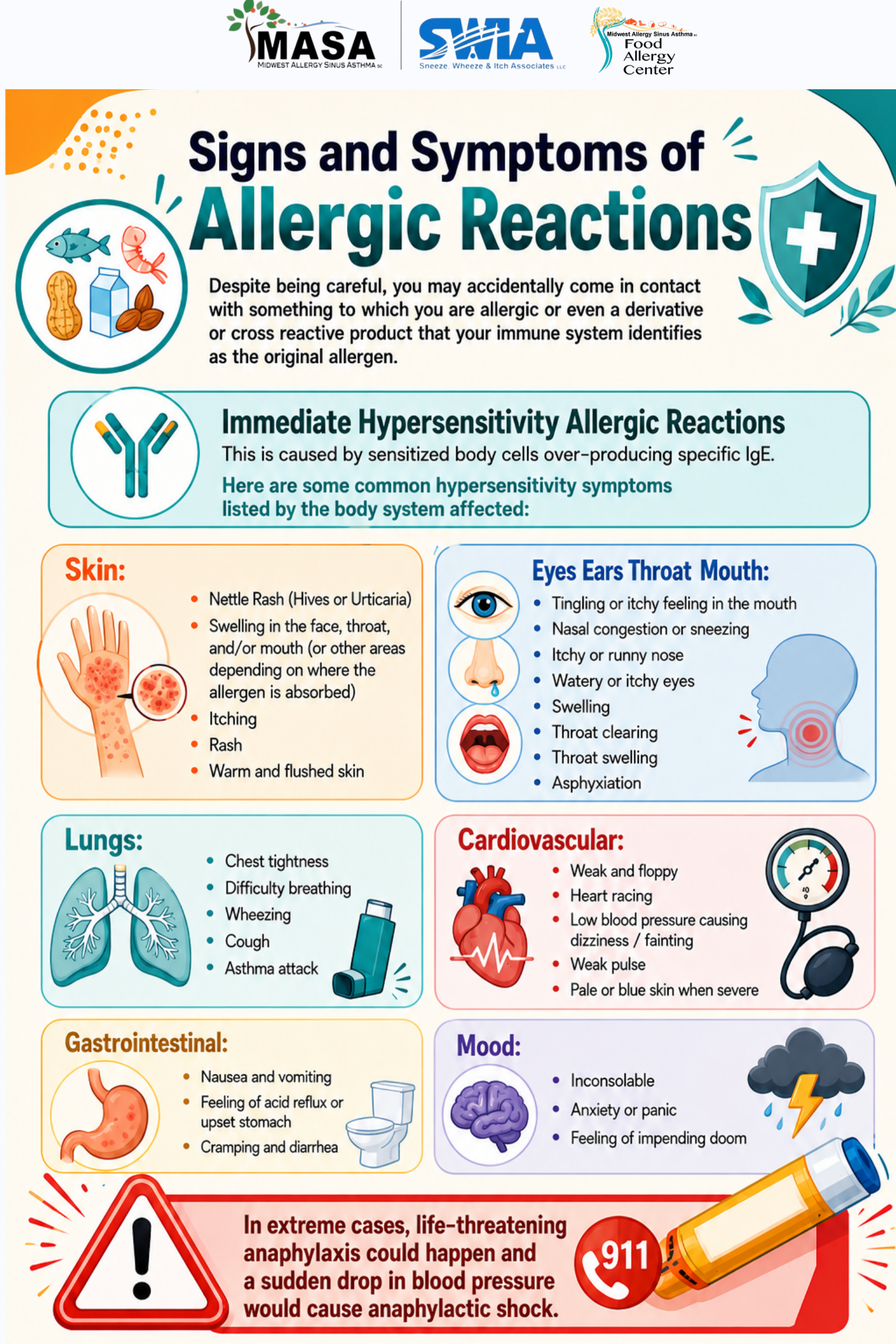
Despite being careful, you may accidentally come in contact with something to which you are allergic or even a derivative or cross reactive product that your immune system identifies as the original allergen.
Immediate Hypersensitivity Allergic Reactions
This is caused by sensitized body cells over-producing specific IgE. Here are some common hypersensitivity symptoms listed by the body system affected:
Skin
- Nettle Rash (Hives or Urticaria)
- Swelling in the face, throat, and/or mouth (or other areas depending on where the allergen is absorbed)
- Itching
- Rash
- Warm and flushed skin
Lungs
- Chest tightness
- Difficulty breathing
- Wheezing
- Cough
- Asthma attack
Gastrointestinal
- Nausea and vomiting
- Feeling of acid reflux or upset stomach
- Cramping and diarrhea
Eyes, Ears, Throat, Mouth
- Tingling or itchy feeling in the mouth
- Nasal congestion or sneezing
- Itchy or runny nose
- Watery or itchy eyes
- Swelling
- Throat clearing
- Throat swelling
- Asphyxiation
Cardiovascular
- Weak and floppy
- Heart racing
- Low blood pressure causing dizziness/fainting
- Weak pulse
- Pale or blue skin when severe
Mood
- Inconsolable
- Anxiety or panic
- Feeling of impending doom
Emergency Note: In extreme cases, life-threatening anaphylaxis could happen and a sudden drop in blood pressure would cause anaphylactic shock. Call 911.
Have an Anaphylaxis Action Plan (A.A.P.)
- An AAP may assist you and your loved ones in identifying allergic reactions, as well as give you a guide to how to react quickly to treat a reaction and get help.
- The AAP will also help you in decision-making with the use of your epinephrine “rescue” medication, which all people who have a moderate to severe allergy to an ingestible substance should carry.
Delayed Hypersensitivity Allergic Reactions (DTH Reactions)
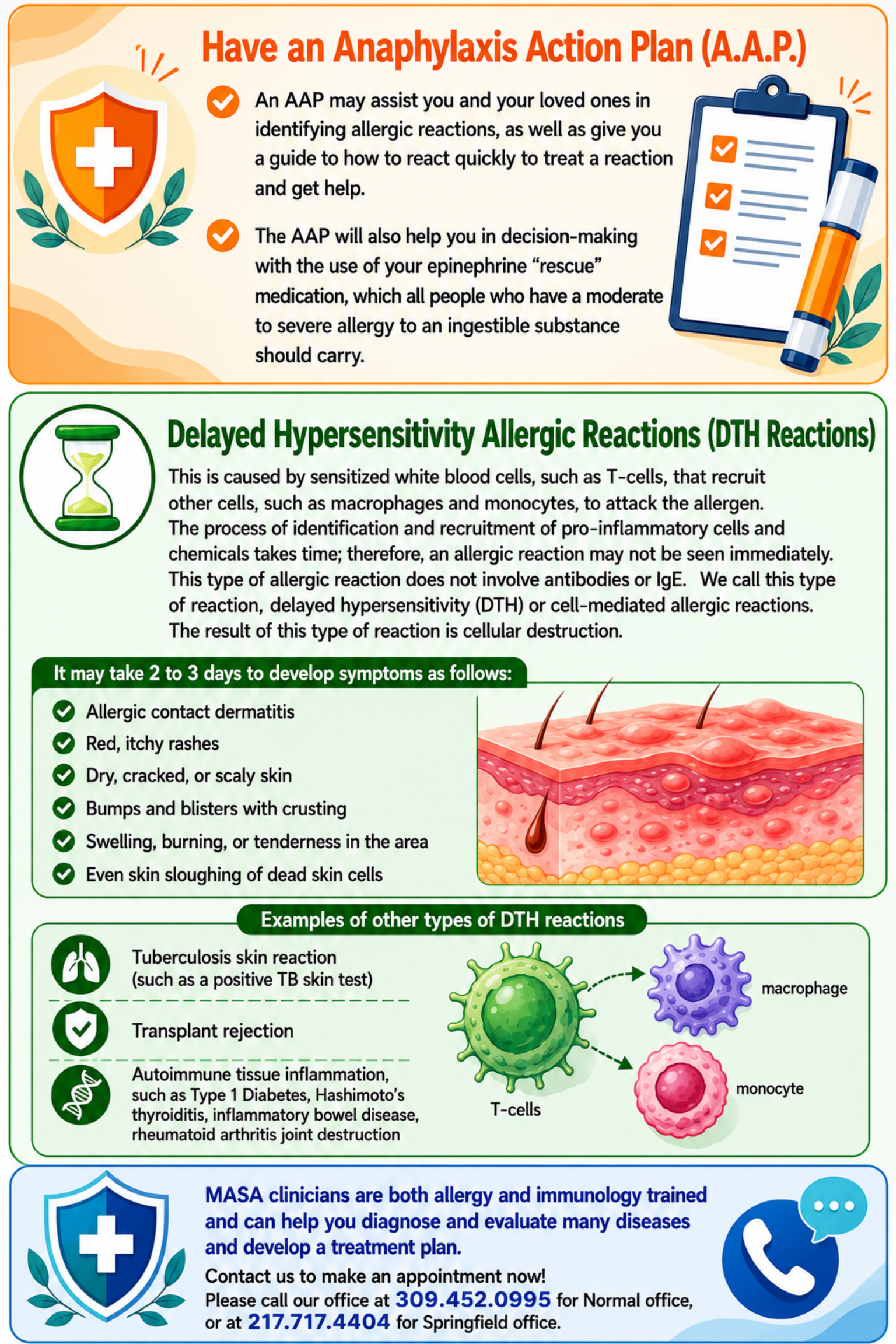
This is caused by sensitized white blood cells, such as T-cells, that recruit other cells, such as macrophages and monocytes, to attack the allergen. The process of identification and recruitment of pro-inflammatory cells and chemicals takes time; therefore, an allergic reaction may not be seen immediately.
This type of allergic reaction does not involve antibodies or IgE. We call this type of reaction delayed hypersensitivity (DTH) or cell-mediated allergic reactions. The result of this type of reaction is cellular destruction.
It may take 2 to 3 days to develop symptoms as follows:
- Allergic contact dermatitis
- Red, itchy rashes
- Dry, cracked, or scaly skin
- Bumps and blisters with crusting
- Swelling, burning, or tenderness in the area
- Even skin sloughing of dead skin cells
Examples of Other Types of DTH Reactions
- Tuberculosis skin reaction (such as a positive TB skin test)
- Transplant rejection
- Autoimmune tissue inflammation, such as Type 1 Diabetes, Hashimoto’s thyroiditis, inflammatory bowel disease, rheumatoid arthritis joint destruction
Contact Us
MASA clinicians are both allergy and immunology trained and can help you diagnose and evaluate many diseases and develop a treatment plan. Contact us to make an appointment now! Normal Office: 309.452.0995 Springfield Office: 217.717.4404