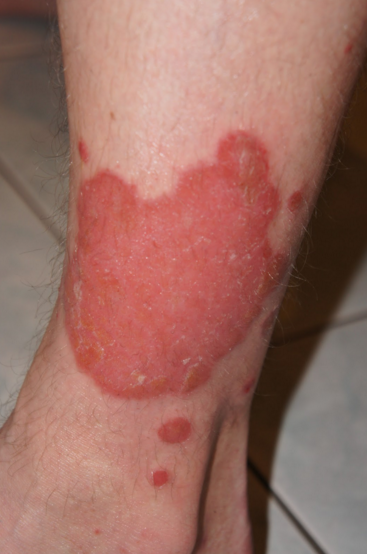
Psoriasis is a skin condition that causes raised, red, scaly patches to appear on a person’s skin and essentially speeds up the skin’s life cycle. It can appear anywhere on the body, but usually affects skin located on the elbows, knees, and/or scalp. Psoriasis can develop at any age, but is common between the ages of 15 and 35. This disease is not contagious or infectious, and symptoms can include various sensations of burning, itching, and/or stinging.
There are five primary types of psoriasis:
1. Plaque psoriasis is the most common for people and distinguishable by raised, red patches covered with white, dead skin cells. They often show on the scalp, knees, elbows and lower back and can be itchy, painful, and may even bleed.
2. Guttate psoriasis is the second most common form of this disease appears in small, dot-like lesions. It typically starts in childhood and could be triggered by a strep infection.
3. Inverse psoriasis appears as smooth, red lesions in folds of the body. It often occurs in folds of the skin and is irritated with excessive sweating and rubbing. Many can have other types of the disease elsewhere on the body simultaneously.
4. Pustular psoriasis involves having blisters of noninfectious pus surrounded by reddened skin. It can occur anywhere on the body, but most often shows up on one’s hands or feet.
5. Erythrodermic psoriasis is a rare, but severe form of the disease that pertains to a widespread, intense redness over most of one’s body. It could potentially cause severe itching and pain, and even cause the skin come off in sheets. It typically appears on people who have unstable plaque psoriasis.
Call us at 309-452-0995 or 217-717-4404 to schedule an appointment if you think your symptoms coincide with psoriasis.
Mild – covers less than 3% of the body
Moderate – covers 3-10% of the body
Severe – covers more than 10% of the body