Low-Histamine Eating for Mast Cell Disorders
A Patient Guide for MCAS, Mastocytosis, and Related Conditions by Midwest Allergy Sinus Asthma SC
Some foods are naturally high in histamine or trigger histamine release in the body. For patients with mast cell disorders, reducing (not necessarily eliminating) these foods may help lessen symptoms such as flushing, hives, GI upset, headache, or nasal congestion. Everyone’s tolerance is different — use this guide as a starting point and adjust with your care team.
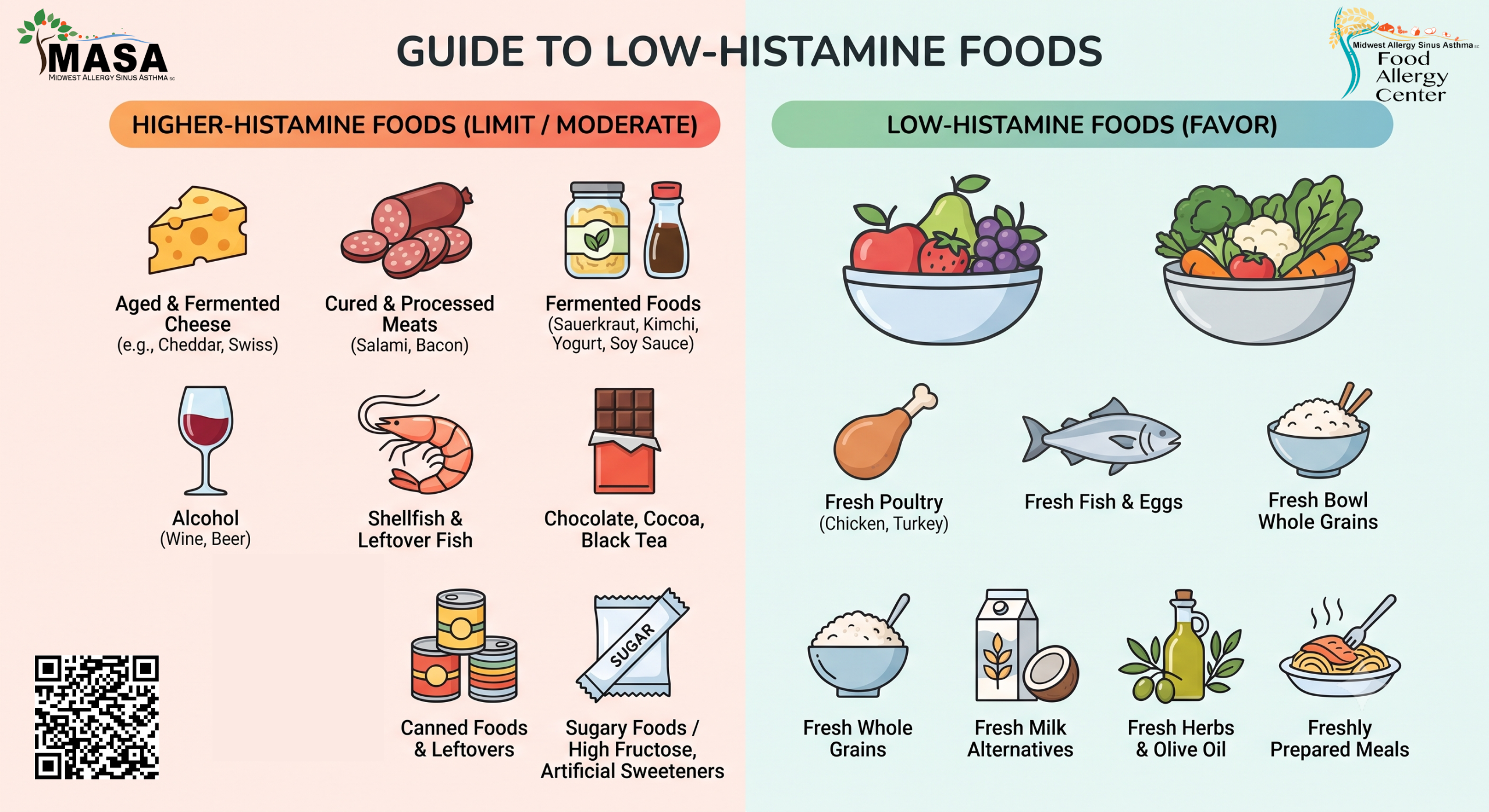
FOODS TO LIMIT VS. FOODS TO FAVOR
| Higher-Histamine (limit / moderate) | Lower-Histamine (favor) |
| Aged/fermented cheese, cured & processed meats (salami, bacon, deli meat) | Fresh poultry, fresh-caught fish, fresh eggs |
| Fermented foods: sauerkraut, kimchi, kombucha, yogurt, soy sauce, vinegar | Most fresh fruits (except citrus, strawberries, banana — moderate) and vegetables (except tomato, spinach, eggplant — moderate) |
| Alcohol, especially wine, champagne, and beer | Fresh whole grains: rice, quinoa, oats |
| Shellfish and leftover/aged fish | Fresh milk alternatives (rice, oat, coconut milk) |
| Chocolate, cocoa, and black tea | Fresh herbs, olive oil, most legumes |
| Vinegar-based condiments, canned foods, leftovers >24–48 hrs | Freshly prepared, quickly-eaten meals |
| Additional: Limit Sugary foods / High Fructose Corn Syrup / Foods with Artificial sugars such as Aspartame, Sucralose, Nutrasweet |
A note on moderation: We do not recommend abruptly stopping all moderate-histamine foods. Gradually reduce and eat these in moderation while you observe your own tolerance, rather than cutting them out all at once.
CURRENT ADDITIONAL RECOMMENDATIONS FROM OUR OFFICE (not histamine issues but help with inflammation)
- Emphasize a high plant-based diet with plenty of fresh vegetables, fruit (as tolerated), and legumes.
- For now, we recommend a dairy-free, wheat-free, and yeast-free diet in addition to the histamine guidance above.
- Cook in small batches and eat foods fresh — histamine rises the longer food sits, even in the refrigerator.
- Freeze leftovers immediately if not eating within a day rather than refrigerating for later in the week.
Anti-Inflammatory Diet — Quick Reference
Emphasize:
- Colorful vegetables and fruits (antioxidants, polyphenols) — berries, leafy greens, cruciferous vegetables
- Fatty fish (salmon, sardines, mackerel) or omega-3 sources like walnuts, flaxseed, chia seed
- Extra virgin olive oil as primary fat
- Whole grains (quinoa, oats, brown rice) over refined grains
- Legumes and nuts
- Herbs and spices with anti-inflammatory properties — turmeric, ginger, garlic
Limit/minimize:
- Added sugars and refined carbohydrates
- Processed and cured meats
- Fried foods and trans fats
- Excess omega-6 seed oils (corn, soybean, sunflower) relative to omega-3s
- Alcohol
- Ultra-processed/packaged foods generally
What about MEDICATIONS & SUPPLEMENTS? Do they help?
Our office does not typically recommend specific supplements since they have not been rigorously studied, and since there is inconsistency in the ingredients and quantity in otc supplements, including lack of regulations in batch to batch manufacturing and controlling for contaminants.
- H2 blockers (e.g., famotidine) can reduce histamine-related GI and systemic symptoms — discuss dosing with your provider.
- DAO (diamine oxidase) supplements taken before meals may help the body break down dietary histamine in some patients.
- Quercetin — the most commonly used and best-studied of the group; a flavonoid found in apples, onions, berries. Rather than blocking the histamine receptor (like OTC antihistamines), it works upstream by inhibiting mast cell degranulation itself. One study found it outperformed cromolyn (the only prescription mast cell stabilizer) at blocking histamine and cytokine release from human mast cells in vitro. Typical doses run 250–1,000 mg/day, often paired with bromelain or in liposomal/phytosome form for better absorption. Worth noting: quercetin can transiently inhibit DAO activity itself, so some patients report an initial symptom flare before improvement.
- Luteolin — a related flavonoid, often paired with quercetin, notable for crossing the blood-brain barrier more readily — marketed for neuroinflammation/brain fog associated with MCAS. Typical dosing 100–200 mg twice daily.
- DAO enzyme supplements — porcine kidney-derived, taken before meals to help break down dietary histamine before absorption (mechanistically different from antihistamines, which block the receptor after histamine is already released).
- Bromelain — pineapple-derived enzyme, often combined with quercetin, purported anti-inflammatory/mast cell support.
- Vitamin C — classically cited as accelerating histamine breakdown and reducing histamine levels; commonly stacked with the above.
- Curcumin (turmeric) — has some preclinical evidence of inhibiting mast cell histamine release, though animal data also shows it can reduce DAO activity.
- Naringenin (grapefruit-derived) and astragalus/astragalin — less mainstream, cited for inhibiting histamine formation or stabilizing mast cells in gut/nasal tissue, but with thinner evidence bases.
- N-acetylcysteine (NAC), stinging nettle, and butterbur (Petasites) — also show up on patient-facing “natural antihistamine” lists, generally for seasonal allergy symptom support rather than mast cell stabilization specifically.
Caution with supplements: Over-the-counter supplements, including DAO products, are not FDA-regulated for content or purity. Products may not contain what is advertised on the label. Please discuss any supplement with our office before starting, and purchase only from reputable sources.
SELF CARE includes daily exercise and moving your body: this can mean stretching and yoga for 15-30 minutes a day. See additional handout.
This handout is for general education and does not replace individualized medical advice. Please contact Midwest Allergy Sinus Asthma, SC with questions specific to your care.