Postural Orthostatic Tachycardia Syndrome (POTS) often involves deconditioning: a smaller, weaker heart that must beat faster to compensate. Standing or upright exercise can trigger the very symptoms — racing heart, lightheadedness, fatigue — that make it hard to move in the first place. The solution is exercise done lying down or reclined (heart below head), progressing to upright activity only as tolerance builds. Please get clearance from your physician before starting.
The golden rule: The first 1–2 months should be done fully recumbent (lying down or reclined) — no treadmill, no stair climbing, no brisk upright walking. This builds blood volume and cardiac strength without triggering orthostatic symptoms.
BEST STARTING EXERCISES (HEART BELOW HEAD)
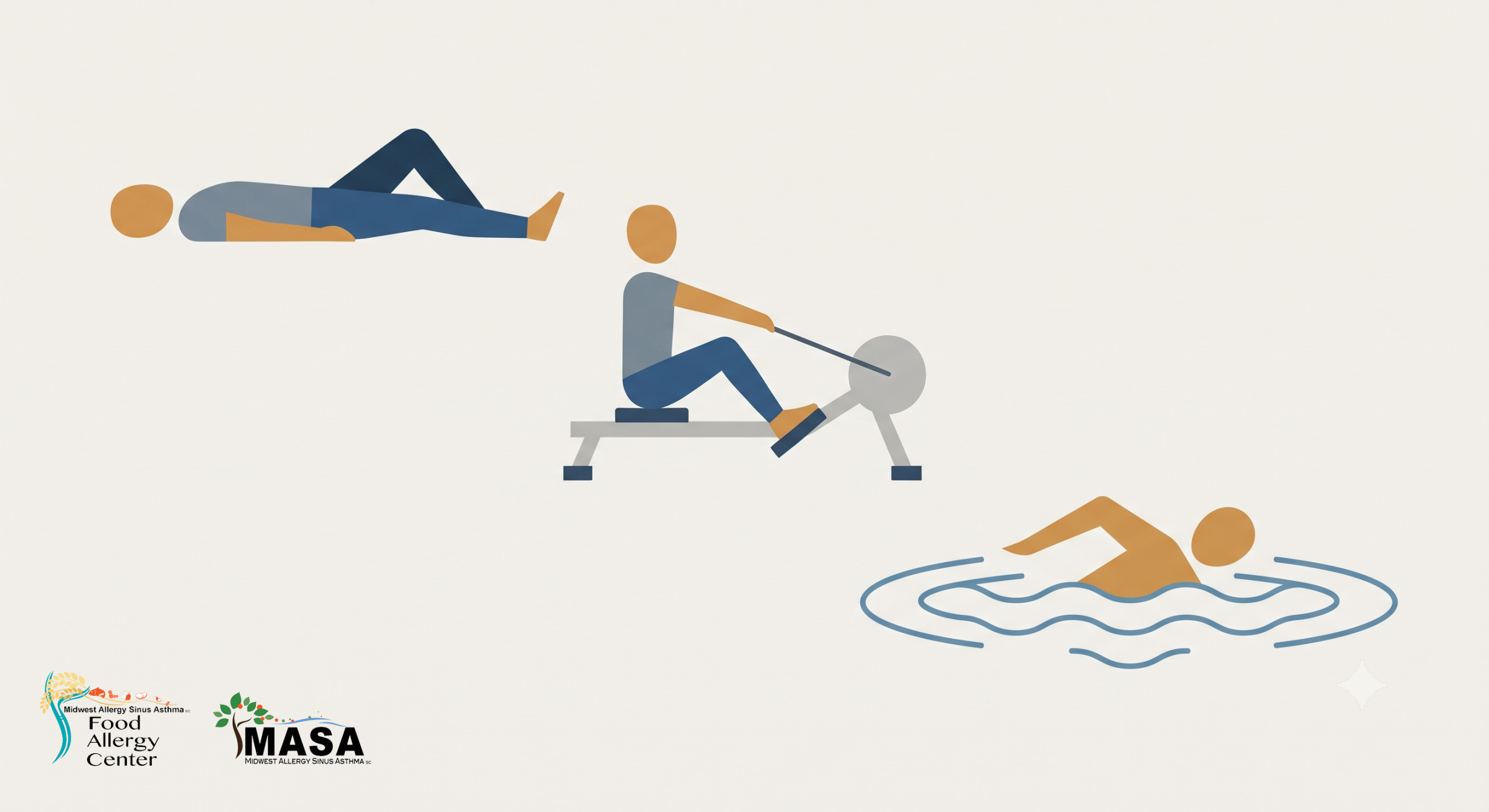
- Recumbent bike — cardiovascular workout without upright stress
- Rowing machine — full-body, seated
- Swimming — water pressure supports blood flow; horizontal position is well tolerated
- Supine cycling or seated stepper
- Reclined core and light resistance work for legs/glutes (the “muscle pump” that helps push blood back to the heart)
GENERAL PROGRESSION
| Stage | Timeframe | Activity |
| 1. Recumbent only | Weeks 1–4+ | Recumbent bike, rowing, swimming, supine cycling; 5–10 min/day, gradually increasing |
| 2. Seated / semi-recumbent | Months 2–3 | Seated stepper, continued rowing, add light seated strength work |
| 3. Transitional upright | Months 3–4 | Recumbent bike toward upright bike; short periods of standing exercise as tolerated |
| 4. Upright | Months 4–6 | Incline treadmill walking, elliptical with arms; progress to jogging if tolerated |
Notes: Consistency matters more than intensity, especially at first — the first month is often the hardest. If symptoms worsen at any stage, return to the previous (more reclined) stage rather than pushing through. Timelines vary widely; some patients need 3–6 months total, and it’s normal to feel worse before feeling better.
Established protocols
- Levine Protocol — developed by Dr. Benjamin Levine at Texas Health Presbyterian Hospital in Dallas, based on research showing POTS patients often have a smaller heart and reduced stroke volume; centers on recumbent exercise with individually calculated heart rate zones rather than fixed intensity. Typically runs three to six months, gradually progressing from recumbent-only toward upright work.
- CHOP Modified Dallas Protocol — Training Mode 1 is any of supine cycling, recumbent bike, swimming laps with a kickboard, rowing, or seated stepper, progressing through modes up to Training Mode 4 (treadmill incline walking, elliptical with arm use, eventually jogging as tolerated); patients may need to return to horizontal modes if symptoms flare.
- Dallas Protocol — the original research protocol these are both derived from.
Why it works physiologically: a 3-month recumbent exercise program produced a 6-7% increase in total blood volume in one study by Qi Fu’s group, giving the cardiovascular system more buffer so the heart doesn’t need to compensate with tachycardia when blood pools in the legs on standing. Levine Protocol studies also showed an 8-12% increase in left ventricular cardiac mass with consistent, zone-targeted training.
Practical dosing: start with just 5-10 minutes of gentle exercise per day, building gradually — consistency matters more than intensity at first. Strength training (legs, glutes, core) is added alongside cardio to build the “muscle pump” that assists venous return.
HELPFUL RESOURCES
- Dysautonomia International — CHOP Modified Dallas POTS Exercise Program (printable protocol): dysautonomiainternational.org/pdf/CHOP_Modified_Dallas_POTS_Exercise_Program.pdf
- Dysautonomia Support Network — Exercise overview: dysautonomiasupport.org/exercise
- Ask our office about a referral to physical therapy experienced with POTS/dysautonomia reconditioning programs
This handout is for general education and does not replace individualized medical advice. Please contact Midwest Allergy Sinus Asthma, Infusion Center and Food Allergy Center for Treatment with questions specific to your care.