
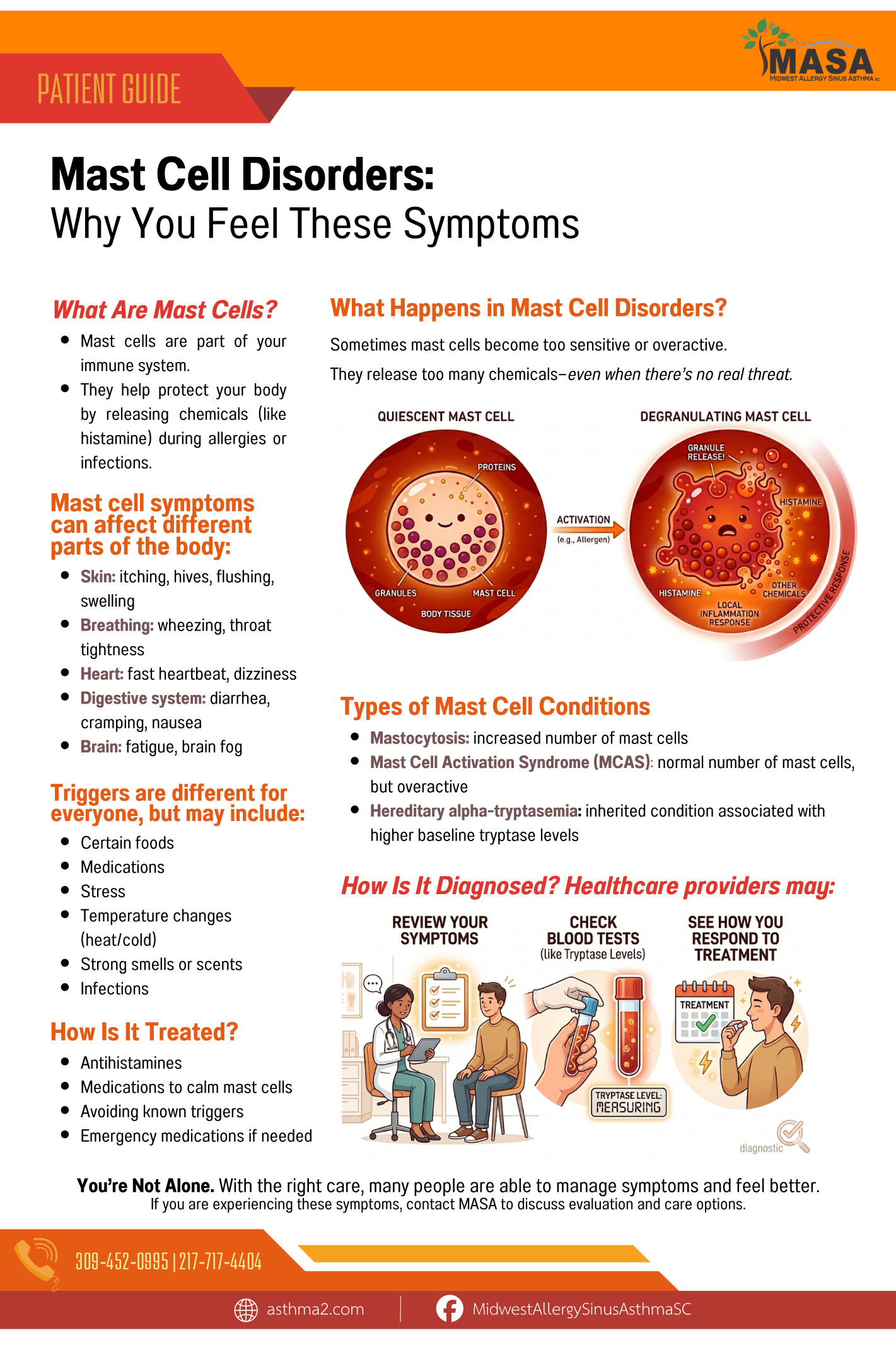
What are mast cells and what do they do? Mast cells are a vital part of your immune system. Their primary job is to protect your body by releasing chemicals, such as histamine, when they detect a threat like an infection or an allergen.
What happens during a mast cell disorder? In people with mast cell disorders, these cells become overactive or too sensitive. They begin to “degranulate,” releasing an excessive amount of chemicals into the body even when there is no real threat present.
What are the common symptoms of a mast cell disorder? Because mast cells are located throughout the body, symptoms can affect multiple systems:
-
Skin: Flushing, itching, hives, and swelling.
-
Breathing: Throat tightness and wheezing.
-
Heart: Dizziness and a fast heartbeat.
-
Digestive System: Nausea, cramping, and diarrhea.
-
Brain: Brain fog and chronic fatigue.
What are the different types of mast cell conditions? There are three primary types of conditions:
-
Mastocytosis: Characterized by an increased total number of mast cells in the body.
-
Mast Cell Activation Syndrome (MCAS): The number of mast cells is normal, but they are overactive.
-
Hereditary alpha-tryptasemia: An inherited condition that results in higher baseline tryptase levels.
What triggers a mast cell reaction? Triggers vary from person to person but commonly include stress, certain foods, medications, infections, strong scents or smells, and temperature changes (extreme heat or cold).
How are these disorders diagnosed? Healthcare providers typically use a three-step approach:
-
A thorough review of your clinical symptoms.
-
Blood tests to measure specific markers, such as Tryptase levels.
-
Observation of how you respond to specific mast cell treatments.
How are mast cell disorders treated? While every patient is different, common treatments include:
-
Daily antihistamines.
-
Medications designed to “calm” or stabilize mast cells.
-
Identifying and avoiding known personal triggers.
-
Keeping emergency medications on hand for severe reactions.
If you are experiencing the symptoms described above, you don’t have to manage them alone. Our specialists are here to help you find clarity and a personalized care plan.
Contact MASA (Midwest Allergy Sinus Respiratory) today to schedule your appointment:
Phone: 309-452-0995 (Normal / Peoria) or 217-717-4404 (Springfield, Carlinville, Jacksonville)
Follow us on Facebook: MidwestAllergySinusAsthmaSC