
Living Gluten-Free: A Complete Guide for Celiac Disease
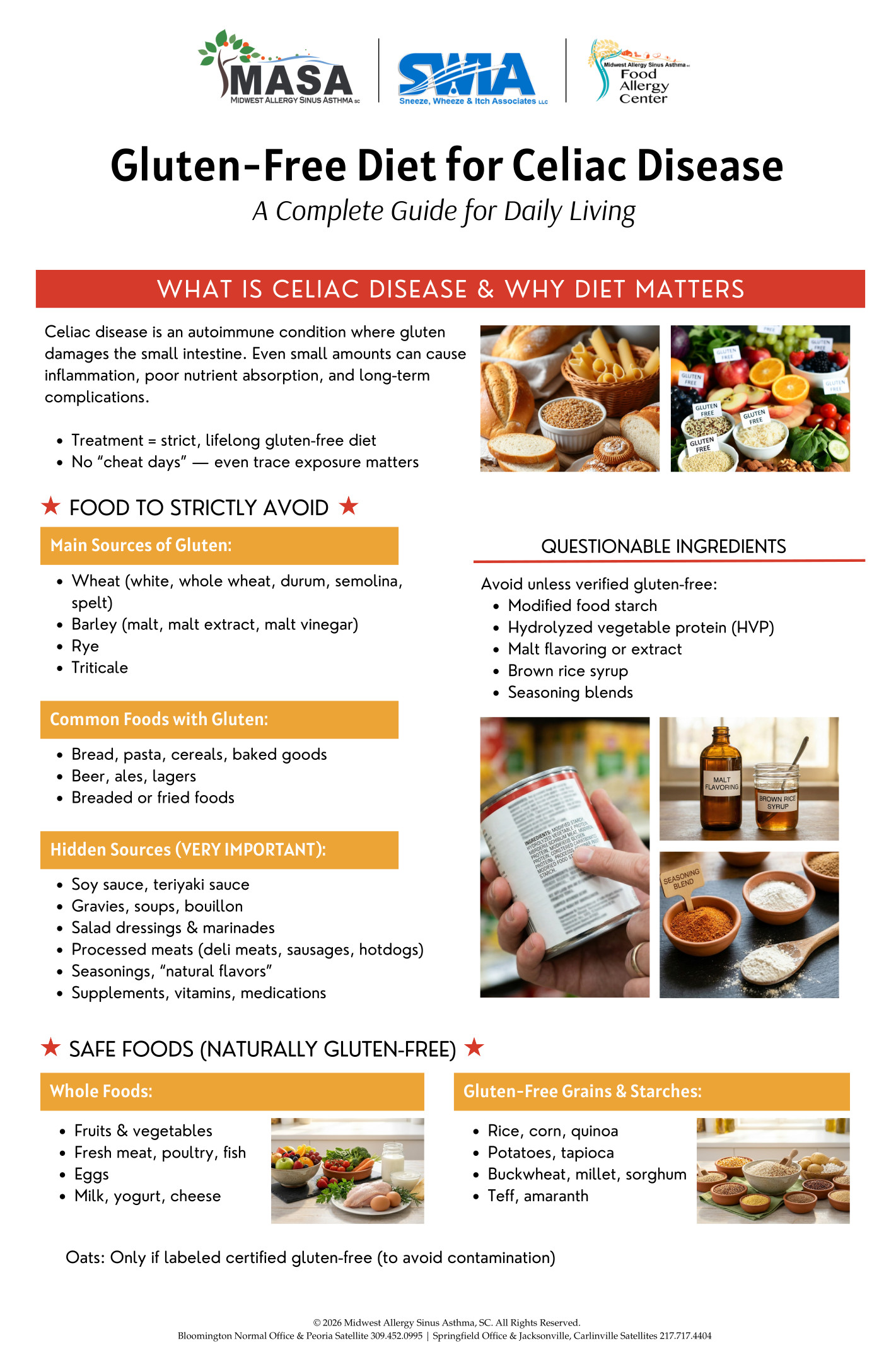
Celiac disease is an autoimmune condition where gluten ingestion causes the body to damage the small intestine. This leads to inflammation, poor nutrient absorption, and long-term health complications. The only effective treatment is a strict, lifelong gluten-free diet. Because even trace amounts of gluten can trigger damage, there are no “cheat days.”
Foods to Strictly Avoid
Gluten is found in many grains and can hide in unexpected processed foods.
-
Main Sources: Wheat (including durum, semolina, and spelt), Barley (malt, malt extract, malt vinegar), Rye, and Triticale.
-
Common Foods: Bread, pasta, cereal, baked goods, beer/ales, and breaded/fried foods.
-
Hidden Sources: Soy sauce, teriyaki, gravies, bouillon, processed deli meats, and even certain vitamins or medications.
Naturally Safe Foods
Focusing on whole foods is the easiest way to stay safe:
-
Whole Foods: Fruits, vegetables, fresh meat, poultry, fish, eggs, and dairy (milk, yogurt, cheese).
-
Grains & Starches: Rice, corn, quinoa, potatoes, tapioca, buckwheat, millet, and sorghum.
-
Note on Oats: Only eat oats labeled “Certified Gluten-Free” to avoid cross-contamination.
Smart Shopping & Label Reading
-
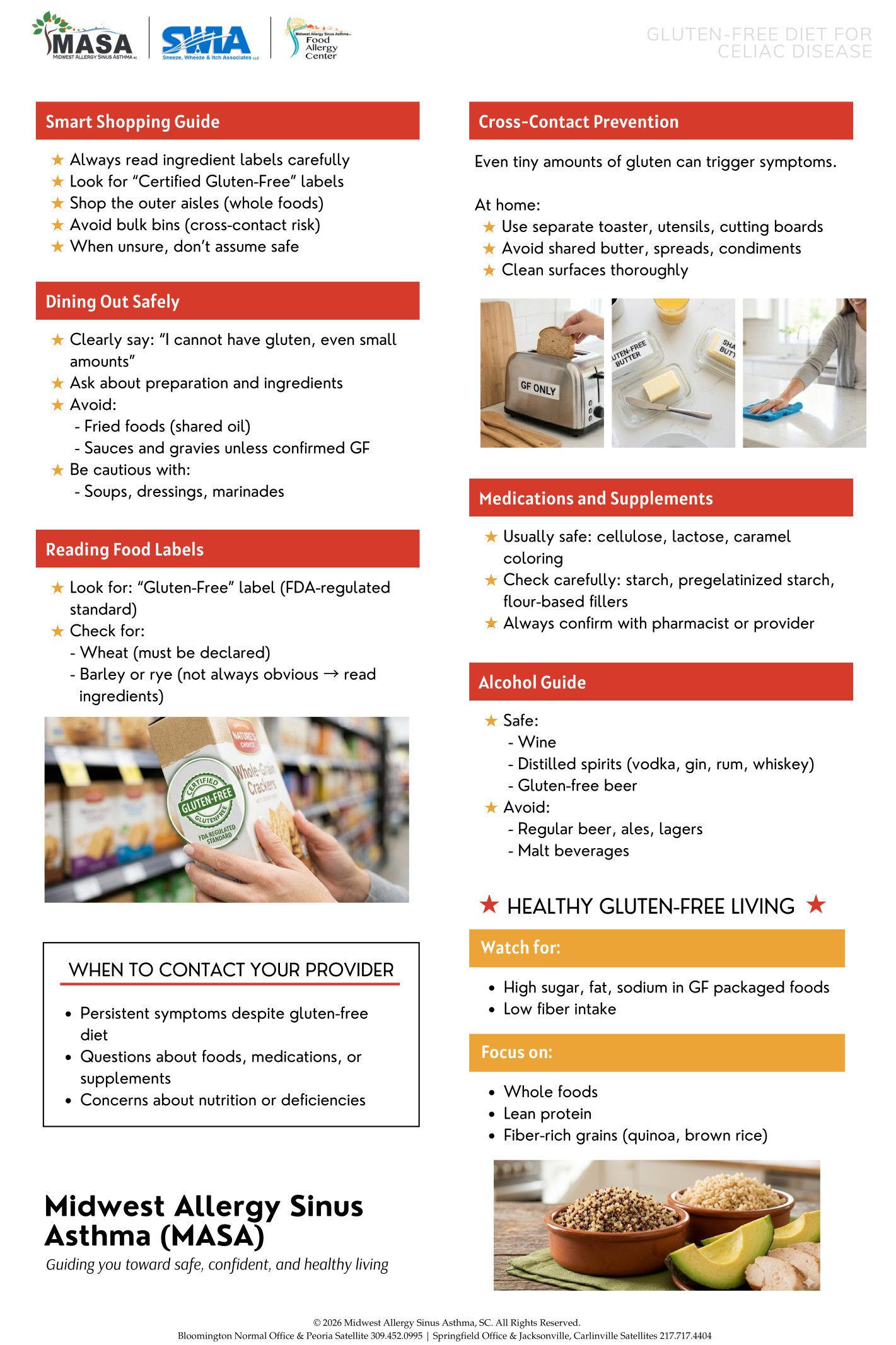
Certified Labels: Look for the “Certified Gluten-Free” seal (FDA-regulated standard).
-
The Outer Aisles: Shop the perimeter of the store for fresh, whole foods.
-
Questionable Ingredients: Be wary of modified food starch, hydrolyzed vegetable protein (HVP), and “natural flavors” unless verified.
Preventing Cross-Contact
Even tiny amounts of gluten matter. At home, use separate toasters, cutting boards, and utensils. Avoid shared condiments (like butter or spreads) where a “crumb-contaminated” knife might have been used.
Healthy Gluten-Free Living
A gluten-free diet isn’t automatically healthy. Many packaged GF foods are high in sugar, fat, and sodium. To thrive, focus on:
-
Lean proteins
-
Fiber-rich grains (quinoa, brown rice)
-
Consistent monitoring of nutrient levels with your provider.
When to See a Specialist
Transitioning to a gluten-free life is a major adjustment. You should contact a healthcare provider if you experience:
-
Persistent symptoms despite following a gluten-free diet.
-
Questions about specific medications, supplements, or hidden ingredients.
-
Concerns regarding nutritional deficiencies.
Schedule Your Appointment Today At Midwest Allergy Sinus Asthma (MASA), we help you navigate Celiac disease with confidence. Our specialists provide comprehensive evaluations and nutritional guidance to ensure you are living your healthiest life.
-
Phone: 309-452-0995 | 217-717-4404