
What is Celiac Disease?
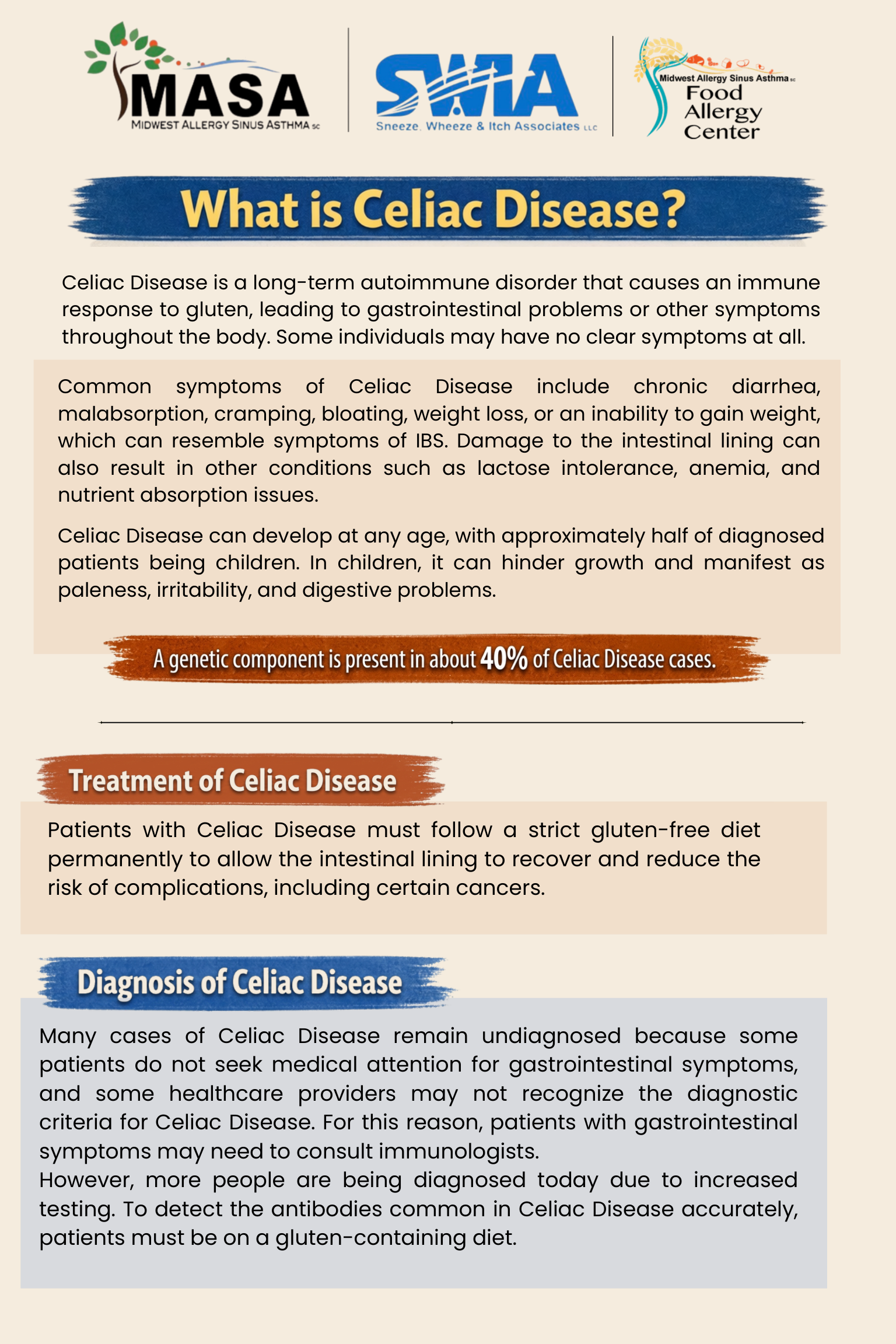
Celiac Disease is a long-term autoimmune disorder that causes an immune response to gluten, leading to gastrointestinal problems or other symptoms throughout the body. Some individuals may have no clear symptoms at all. Common symptoms of Celiac Disease include chronic diarrhea, malabsorption, cramping, bloating, weight loss, or an inability to gain weight, which can resemble symptoms of IBS. Damage to the intestinal lining can also result in other conditions such as lactose intolerance, anemia, and nutrient absorption issues. Celiac Disease can develop at any age, with approximately half of diagnosed patients being children. In children, it can hinder growth and manifest as paleness, irritability, and digestive problems. A genetic component is present in about 40% of Celiac Disease cases.
Treatment of Celiac Disease
Patients with Celiac Disease must follow a strict gluten-free diet permanently to allow the intestinal lining to recover and reduce the risk of complications, including certain cancers.
Diagnosis of Celiac Disease
Many cases of Celiac Disease remain undiagnosed because some patients do not seek medical attention for gastrointestinal symptoms, and some healthcare providers may not recognize the diagnostic criteria for Celiac Disease. For this reason, patients with gastrointestinal symptoms may need to consult immunologists.
However, more people are being diagnosed today due to increased testing. To detect the antibodies common in Celiac Disease accurately, patients must be on a gluten-containing diet.
What is Gluten?
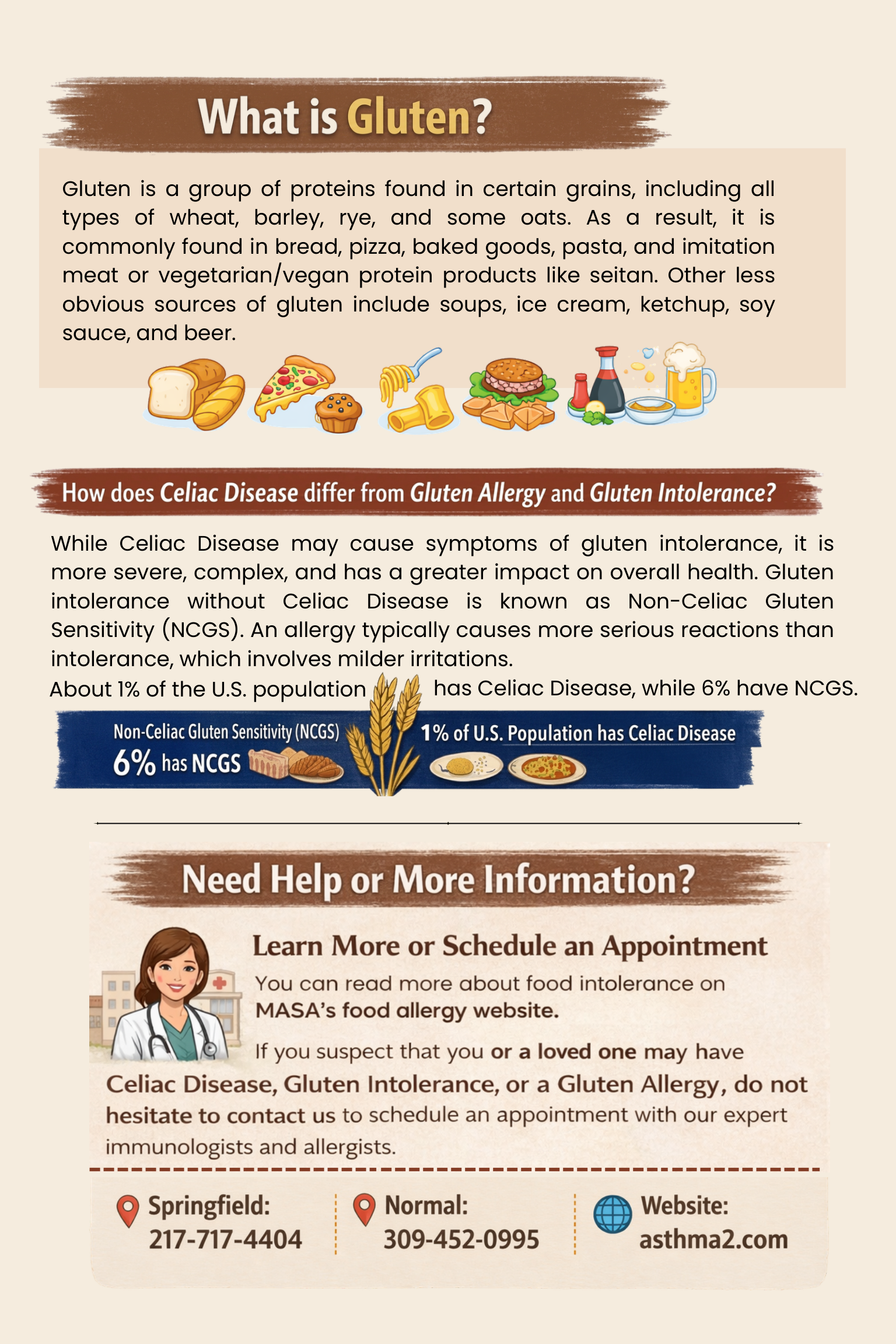
Gluten is a group of proteins found in certain grains, including all types of wheat, barley, rye, and some oats. As a result, it is commonly found in bread, pizza, baked goods, pasta, and imitation meat or vegetarian/vegan protein products like seitan. Other less obvious sources of gluten include soups, ice cream, ketchup, soy sauce, and beer.
How does Celiac Disease differ from Gluten Allergy and Gluten Intolerance?
While Celiac Disease may cause symptoms of gluten intolerance, it is more severe, complex, and has a greater impact on overall health. Gluten intolerance without Celiac Disease is known as Non-Celiac Gluten Sensitivity (NCGS). An allergy typically causes more serious reactions than intolerance, which involves milder irritations. About 1% of the U.S. population has Celiac Disease, while 6% has NCGS. You can read more about food intolerance on MASA’s food allergy website.
If you suspect that you or a loved one may have Celiac Disease, Gluten Intolerance, or a Gluten Allergy, do not hesitate to contact us to schedule an appointment with our expert immunologists and allergists: 309-452-0995 or 217-717-4404.
Further reading:
Read the SJ-R article about gluten-free options in Springfield, IL (07/2014)
https://eu.sj-r.com/story/lifestyle/food/2014/07/26/growing-concern-leads-to-more/36783796007/
Listen to Dr. Siri’s 2-minute radio interview about Celiac Disease and paid clinical study opportunity in Normal, IL (2024-2025)
Infographic by Northwestern Medicine
https://www.nm.org/healthbeat/healthy-tips/celiac-disease-vs-gluten-intolerance-infographic